
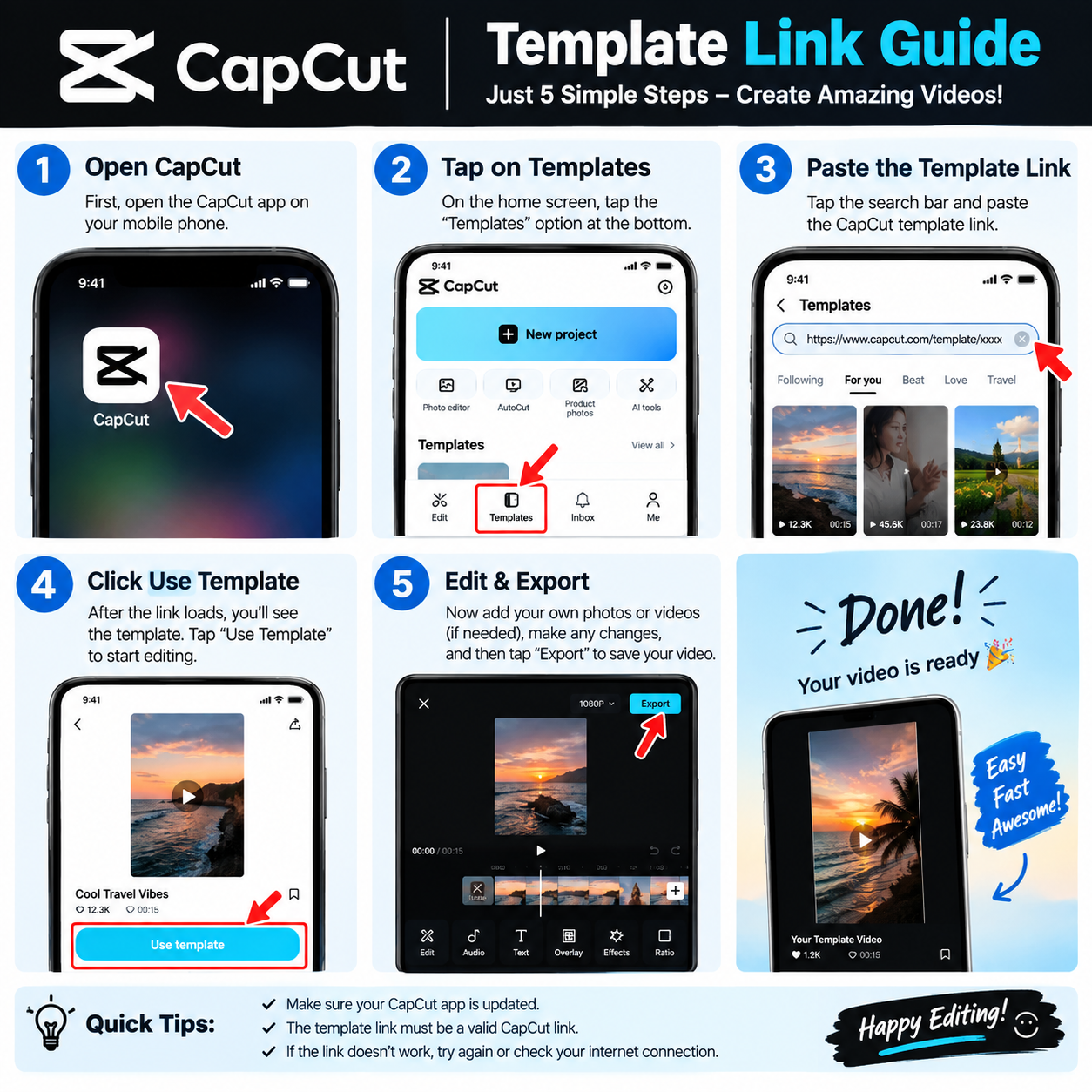
CapCut Template Link Guide:
Getting a handle on this CapCut Template Link Guide is honestly the ultimate shortcut if you want to skip hours of exhausting timeline cuts and just start dropping viral edits right away. Let’s be real — when you’re doom-scrolling on TikTok or Reels, seeing those hyper-synced, jaw-dropping edits makes you wonder how creators pull it off so fast without losing their minds. Once you actually start figuring out how a CapCut Template Link Guide workflow operates, you realize nobody’s doing all that manual math by hand anymore — they’re leaning heavily on pre-built project setups. Every creator worth their salt who’s used a Template Link Guide knows that leaning on shared layouts is basically the not-so-secret trick to staying on top of trends without completely burning out by Tuesday.
Diving into a solid CapCut Template Link Guide means you can churn out genuinely thumb-stopping content straight from your phone while keeping your daily workflow fast and manageable. Whether you’re putting together heavy gaming montages, aesthetic travel reels, or fast-paced transition clips, knowing how to actually find and apply a reliable CapCut Template Link Guide gives you a real edge over everyone else. Over the course of this guide, we’re going to go through every corner of a proper CapCut Template Link Guide — showing you step by step how to find active links, avoid broken import loops, and tweak shared projects until they look completely your own.
Why This CapCut Template Link Guide Matters for Creators Right Now:
The internet moves at a genuinely terrifying pace, and if you spend three days sweating over one transition edit, the trend’s already dead by the time you post it. Viewers today expect instant visual payoff, flawless beat matching, and whatever style’s trending the exact second it blows up. That’s exactly why getting comfortable with a CapCut Template Link Guide is such a big deal for any busy creator just trying to stay relevant in an oversaturated feed.
Keeping up with trends fast: using a solid CapCut Template Link Guide lets you jump on a viral format within seconds of it landing on your FYP.
Way less editing friction: following the steps laid out in a CapCut Template Link Guide saves you from wasting hours on messy keyframe layering or complicated time-mapping.
Consistent audience retention: leaning on the shortcuts a CapCut Template Link Guide gives you helps you keep a steady, high-energy posting schedule going without burning out.
Easy personalization: once you get the hang of a standard CapCut Template Link Guide, swapping placeholder clips for your own footage takes under a minute.
Understanding How Shared Edits Actually Work:
At its core, a shared link points to a pre-timed sequence where someone else already did the tedious groundwork — mapping the cuts, timing the text pops, locking in the color tones. When you pull up a CapCut Template Link Guide resource, the app automatically drops your gallery selections straight into those empty timeline slots.
Here’s the catch though — if you blindly throw random clips into a shared template, things can end up looking awkwardly cropped or completely off-beat. Dig a little deeper into a good CapCut Template Link Guide, and you’ll learn to trim your source clips beforehand so the auto-framing actually lands right on your subject’s face. And if a heavy bass drop is meant to trigger a flash cut, understanding the principles behind a solid CapCut Template Link Guide makes sure your chosen clips actually line up with that snap.
Getting Your Phone Ready for Template Imports:
Before you start tapping every random share link floating around social media, getting your app and gallery organized actually matters a lot if you want to avoid annoying import bugs and random freezes.
Keep your app updated: always check that your app is on the latest build before opening any link from a CapCut Template Link Guide — this avoids a lot of nasty crash screens.
Prep your media beforehand: clean asset prep gets emphasized in pretty much every real-world CapCut Template Link Guide out there — keep the exact number of photos or videos ready in a dedicated folder before you hit import.
Stable internet matters: you need a decent Wi-Fi or mobile signal when pulling a project through a CapCut Template Link Guide, since the app’s streaming timeline data live as it loads.
Watch your storage: before running a heavy template import from a CapCut Template Link Guide, double check your phone actually has room in both RAM and storage to handle the cached preview files.
Finding and Verifying Safe Import Links:
Hunting down shared project URLs across the internet can honestly feel like walking through a minefield of spammy redirects and dead links. Skip being careful about this, and using any random CapCut Template Link Guide is just going to leave you frustrated and empty-handed.
Knowing which sources are actually safe: finding clean sources really comes down to knowing where trusted editors actually post their links. Read through a proper CapCut Template Link Guide and you’ll notice verified creator profiles, official community pages, and dedicated curation hubs are way safer than random third-party download sites. Sticking to the trusted routes any good CapCut Template Link Guide points you toward keeps your device safe from sketchy redirects.
Dealing with broken or expired links: sometimes you’ll click an old trend link only to find out the original creator deleted it, or a platform update just broke it. A smart habit any thorough CapCut Template Link Guide will teach you is to always keep a few backup creators on hand, so your posting schedule doesn’t grind to a halt just because one link died.
Step-by-Step: Using Your First Imported Project:
Alright, let’s actually put a shared layout into motion. Follow this field-tested process — pulled straight from the core methods behind a reliable CapCut Template Link Guide — to pull off a clean media swap.
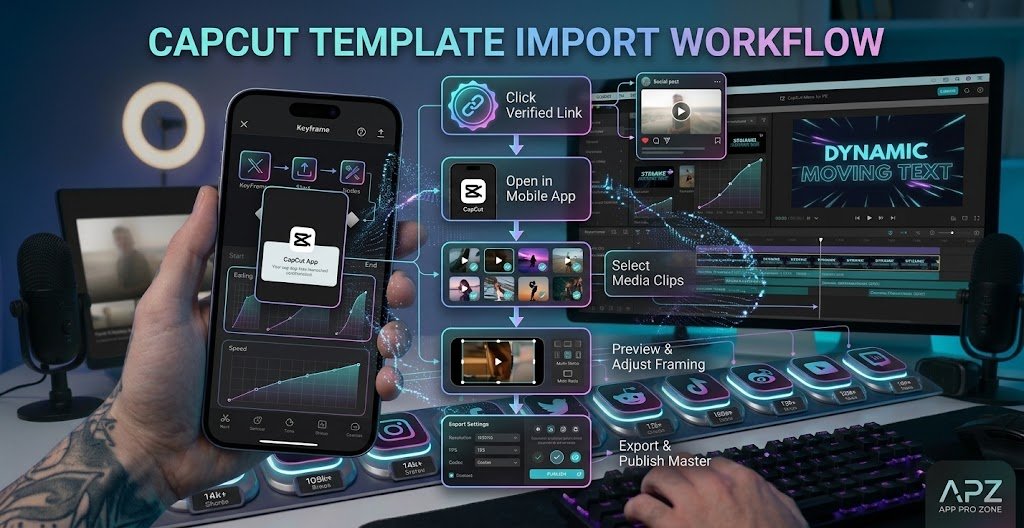
Step 1: Finding and Clicking the Link:
Find a verified trend link from an actual trusted creator — this gets stressed a lot in any solid CapCut Template Link Guide. Tap the link directly from your mobile browser.
Step 2: Getting Into the Editor:
The link should automatically wake up your app and show you a preview of the trending edit. Tap the “Use Template” button, just like any standard CapCut Template Link Guide walks you through.
Step 3: Adding Your Own Footage:
Your gallery picker will pop open at this point. Carefully pick out the exact number of clips or photos the template’s slots are asking for — this is a key part of how the whole CapCut Template Link Guide workflow is structured.
Step 4: Trimming and Fine-Tuning:
Once your clips land on the timeline, use the cropping and dragging tricks any CapCut Template Link Guide covers to make sure the focal point of your shot actually lines up with where the action’s happening.
Customizing Like a Pro Once You’ve Got the Basics Down:
Once the basic import is second nature, you can start hacking these pre-made layouts so your content doesn’t just blend in with the thousands of other people using the same exact trend. Experienced editors who’ve gone deep into advanced CapCut Template Link Guide strategies usually swap text layers, throw on their own filters, or layer in extra audio to build something that actually feels like their own channel.
Swapping out default text: replacing the generic titles with your own typography, exactly as a good CapCut Template Link Guide teaches, gives your video an instant branding boost.
Tweaking the color grade: dropping your own LUT or exposure adjustment over the imported project is what cuts down that cookie-cutter look — straight from CapCut Template Link Guide wisdom.
Swapping the audio: muting that overused trending track and sliding in a fresh song using the methods a CapCut Template Link Guide teaches helps your upload dodge algorithm fatigue.
Optimizing your export bitrate: protect your video from ugly pixelation by manually double-checking your resolution and frame rate caps right before the final render — a tip highlighted in pretty much every solid CapCut Template Link Guide.
Fixing Common Import and Rendering Problems:
Even on a top-tier phone, processing cloud-fetched layouts can occasionally throw a tantrum — missing media prompts, frozen render bars, all of it. Here’s how to keep things stable while working within CapCut Template Link Guide parameters:
“Template No Longer Available”: if you see this, the original creator took the link down. Just search for another resource matching the same CapCut Template Link Guide terms you were originally after.
Export stalling at 99%: heavy effect processing combined with cloud-fetched assets can choke your phone’s memory pretty fast. Clear your temp cache before exporting anything built through a CapCut Template Link Guide.
Clips cropping awkwardly: if someone’s head gets chopped off during playback, manually tap in and re-adjust the framing inside each timeline slot — a common trap any good CapCut Template Link Guide warns you about.
App freezing during import: restart your phone and make sure your Wi-Fi’s actually stable before opening any link off your CapCut Template Link Guide list.
Frequently Asked Questions:
What’s the real benefit of using a CapCut Template Link Guide?
It helps you quickly find, verify, and apply shared project layouts, so you can put out trendy, polished-looking videos in a fraction of the usual time.
Are these shared template links actually free?
Yes, the vast majority of shared community links out there are free to use — though it’s always worth double-checking the creator’s terms, something any decent CapCut Template Link Guide will remind you to do.
Can I actually edit the effects inside an imported template?
Definitely. The timing and transitions come pre-set, sure, but applying what a CapCut Template Link Guide teaches lets you dig into the timeline layers and customize the text, filters, and clips however you want.
Why won’t my link open the app automatically?
If the link’s opening in a browser instead of your app, try pasting the URL directly into your app’s search bar, or check your phone’s default link-handling settings — something covered in most troubleshooting CapCut Template Link Guide resources.
Time to Level Up Your Content
Getting better at short-form content really comes down to smart shortcuts, adapting to trends fast, and having solid technical references to lean on. Once you genuinely understand every concept covered in a solid CapCut Template Link Guide, you’ve got everything you need to start putting out content that grabs attention instantly.
Take everything we’ve covered here, go find a trending link, and start customizing your next post today. Whether you’re building a personal brand or running this as a full-on content hustle, applying the ideas from a CapCut Template Link Guide is genuinely going to streamline your entire video production process